Getting to Coors Field
The quick read
The simplest move is to stay at a hotel within walking distance of the ballpark and skip transit entirely. If that’s not feasible, type “Coors Field” into Google Maps or Apple Maps and switch the directions to the public transit option. That’ll tell you in 15 seconds whether Denver’s RTD light rail works for your specific starting location, or whether a rideshare is going to be faster and less complicated. Driving is the third lever, and SpotHero is the easiest way to find a private LoDo lot when you do drive. Don’t grab a Lyft right at the final out: surge pricing is brutal for the first 30 to 60 minutes after the game.
Start with where you’re staying
Before you think about transit, think about where you’re sleeping. The walk to Coors from the closest LoDo and Union Station hotels is 5 to 10 minutes. If you can stay close enough to walk, you don’t need to think about parking, light rail timing, or rideshare surges. The walk is the trip.
We cover the walkable hotel set in detail in the Where to Stay guide. The short version: the Rally Hotel at McGregor Square is directly across the street, the Crawford at Union Station is two blocks away, and there are several mid-range walkable options around them.
If you’re staying somewhere outside walking distance, read on.
The 15-second decision: open Google Maps
The fastest way to figure out the right transit move from your specific starting point is also the most obvious one: type “Coors Field” into Google Maps (or Apple Maps), set your hotel as the start, and toggle through the modes. Drive, transit, rideshare. The app will tell you the time and cost trade-off for each option from your actual location.
The reason that matters: Denver’s public transit system doesn’t reach every neighborhood with the same convenience. Some stays are 12 minutes door-to-door on the train. Others are 35 minutes with two transfers. The best move from one Denver hotel can be a terrible move from another one a mile away. Don’t let any guide (including this one) tell you what’s universally best without checking your specific case.
With that caveat in mind, here’s the lay of the land for the three main options.
Option 1: Public transit (RTD light rail)
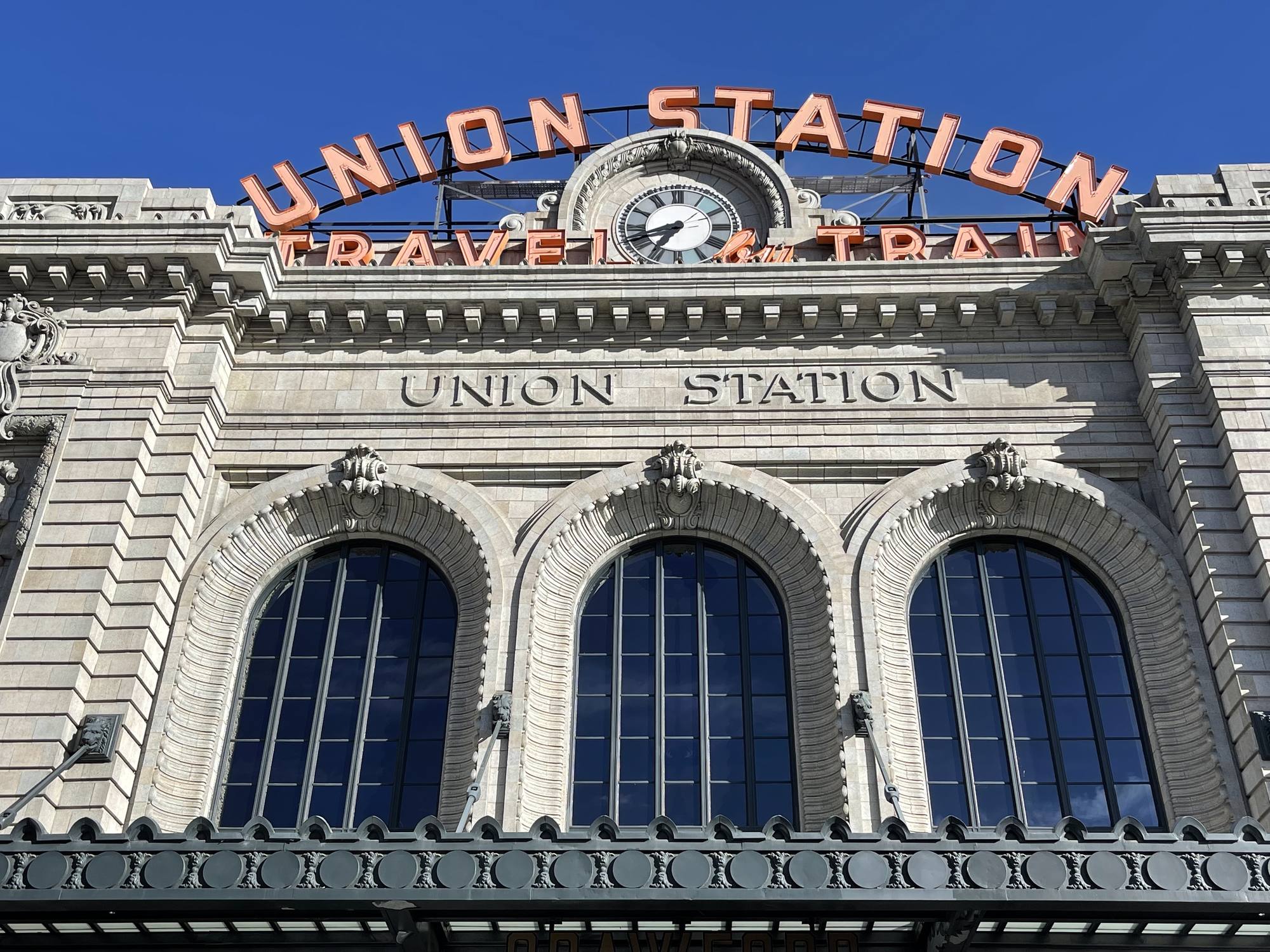
Denver’s regional transit system is called RTD (Regional Transportation District). It runs the bus and light rail network across the metro area. RTD’s light rail and bus lines all converge at Union Station, which sits two blocks from Coors Field, about a 7 to 10 minute walk.
For visitors flying into DIA or staying near a light rail station that connects to Union Station, RTD is the easiest move. For visitors staying in parts of Denver that the light rail doesn’t reach efficiently, a rideshare is faster and often not much more expensive once you factor in the time saved.
How RTD pricing works
RTD sells fares in tiered categories. The most useful ticket for a Rockies game visitor is the day pass, which gives you unlimited rides on the system for the day you activate it. Pricing per person, current as of 2026:
- Standard day pass: $5.50
- Airport day pass (includes the A Line to/from DIA): $10.00
- Discounted day pass: $2.70 for eligible riders (seniors, people with disabilities, Medicare cardholders, low-income riders enrolled in the LiVE program, kids 6-19 with the youth fare)
A few things worth knowing about how the day pass works:
- It’s a per-person ticket. A single $5.50 pass does not cover a family. A family of four pays roughly $22 for day passes, which can be more than parking at one of the official Rockies lots.
- It activates when you start riding (or buy it on the app), and it’s good for unlimited rides on the rest of that calendar day. You can use it for the trip out, the trip back, and a side trip if you take one.
- It works on light rail, the A Line train to DIA (only with the airport day pass), and most RTD buses.
How to buy
The easiest way to buy is the MyRide app. MyRide is RTD’s official mobile fare app on iOS and Android. You buy your day pass in the app, activate it when you’re ready to ride, and show the on-screen pass to the fare inspector if asked. There are also kiosks at every station as a backup if you don’t want to use the app.
If you’ve never used MyRide before, download it before you leave the airport or hotel. Setup takes a couple of minutes. Buy the airport day pass if you’re using the A Line from DIA; buy the standard day pass if you’re getting on the system at any other station.
Buy the ticket: the enforcement reality
We get asked this enough that the answer goes in plain English: buy the ticket.
The math:
- Maximum fare evasion fine is up to $106.50 including court costs, under Colorado statute C.R.S. § 42-4-1416(2). Well above the $5.50 pass.
- Repeat offenses also trigger RTD service suspension, escalating from a 1-day suspension to as much as 90 to 365 days for repeat violators.
- RTD ran nearly 5 million fare checks in 2025 and has been increasing security for 2026.
Enforcement is variable in any one moment. A packed post-game car probably won’t get checked, but a single citation more than wipes out a season’s worth of skipped fares. Put simply, the risk isn’t worth potentially saving a few bucks a person.
The exceptions where enforcement is consistent: the A Line to DIA and Mile High turnstiles require active fares to get through. Don’t try those without a ticket.
When RTD is the right call
- You’re flying into DIA. The A Line train from DIA to Union Station runs every 15 minutes during the day, about a 37-minute trip. Walk two blocks from Union Station to Coors.
- You’re staying at a downtown or LoDo hotel within a short walk of a light rail stop.
- Your hotel is a short walk from any light rail stop on a line that runs to Union Station with no more than one transfer. (Type “Coors Field” into Maps and the public-transit option will tell you in 15 seconds.)
- You’re traveling solo or as a couple. Day-pass math is much better than for families.
When RTD probably isn’t the right call
- You’re staying in a neighborhood the light rail doesn’t reach efficiently (most of west Denver, the Cherry Creek area, Wash Park, the Highlands depending on exactly where).
- You’re a family of four or more, and the math on four day passes plus the walk to/from the station tips toward driving or rideshare.
- You’re carrying a lot of stuff (game-day signs, a cooler, a stroller).
- It’s late at night and you’d rather not wait at a train station.
Option 2: Rideshare (Uber and Lyft)
Designated Coors Field rideshare zones:
- 22nd & Blake Street (primary)
- 21st & Market Street (secondary)
Rideshare from your hotel to the ballpark before the game is straightforward. Rideshare back to your hotel after the game is the part that catches people.
When 50,000 fans empty out of one stadium at the same time, every rideshare app surges immediately and stays surged for at least the first 20 to 30 minutes after the last out. The numerical surge multiplier varies by night, but the pattern is reliable: high right after the game, drops as the crowd disperses.
Two ways to handle it depending on what you want:
- If you want to save money and you’re up for more of the night: walk a block, post up at one of the LoDo bars, let the surge collapse for 30 to 60 minutes, then ride. You’ll save real money and the rest of LoDo is right there. The around-the-ballpark guide covers the bars within walking distance built for exactly this play.
- If you’re tired and just want to get back: the surge is part of the trip. Order the ride, pay the multiplier, sleep in your own bed by 11. For families, multi-game trips, or anyone with an early flight, this is often the right call.
When rideshare is the right call
- You’re staying somewhere the light rail doesn’t reach efficiently and you don’t have a rental car.
- You’re traveling solo or as a couple and don’t want to deal with parking or transit.
- The walk from your hotel is awkward but a rideshare is 10 minutes.
- It’s raining or snowing and the walk feels worse than the surge.
Option 3: Driving and parking
The official Rockies lots are Lots A and B, with 4,300+ spaces and a shuttle to Gate A.
- Advance purchase: $18 Mon–Thu / $23 Fri–Sun
- Day-of: Lot A $19, Lot B $17
- Lots open 2.5 hours before first pitch
- Buy at rockies.com/parking, the Coors Field Ticket Office, Rockies Dugout Stores, or by phone at 303-ROCKIES (762-5437)
The lot shuttle drops at Gate A, which is the right-center field gate. Walk-time from Lot A is about 8 to 10 minutes for the actual walk plus the shuttle queue.
One thing to set straight: the Rockies lots open 2.5 hours before first pitch, but that’s not because there’s a tailgate scene. You’ll see a few sporadic tailgaters, but the real pre-game energy is across the tracks in LoDo. Bars, restaurants, the McGregor Square plaza, and the rest of the spots covered in Around the Ballpark are where almost everyone is pre-gaming. If you parked early, walk over.
SpotHero for cheaper LoDo lots
For private lots in LoDo, SpotHero is the easiest option. SpotHero is a parking marketplace app that lets you reserve a spot at a private downtown lot in advance, prepay through the app, and walk straight to the lot on game day. They have a dedicated Coors Field landing page. Often a few dollars cheaper than the official Rockies lots and lets you choose proximity instead of riding the shuttle.
Workflow:
- Open the SpotHero app or coors-field landing page
- Enter your game date and time
- Filter by walking distance, price, or covered vs. open
- Reserve and pay in the app
- Show the digital pass at the lot entrance
Some links on this page are affiliate links. If you book through them we earn a small commission at no extra cost to you. It never changes what we recommend.
When driving is the right call
- You’re a family of three or more (parking math beats per-person transit fares).
- You’re staying somewhere outside walking and outside the light rail’s efficient reach.
- You want maximum flexibility on departure time after the game.
- You’re already going to be driving in Denver as part of your trip (you’ve got a rental car anyway).
Gates and entrances
Address: 2001 Blake Street, Denver, CO 80205 (20th & Blake).
There are five lettered gates:
- Gate A. Right-center field, near section 105. Opens 2 hours before first pitch.
- Gate B. Right-field corner, 22nd & Blake, near section 111. Opens 90 minutes before first pitch.
- Gate C. First base side, 21st & Blake, near section 122. Opens 90 minutes before first pitch.
- Gate D. Home plate side, 20th & Blake, near section 130. Opens 90 minutes before first pitch.
- Gate E. Left-field corner, on the Wynkoop Walkway, near section 147. Opens 2 hours before first pitch.
Gates A and E are the early gates for batting practice and the Rooftop $3 beer window. Once you’re inside the early-open zone, you have to stay in the Left Field Pavilion until the rest of the gates open at 90 minutes before first pitch.
Gate strategy
The default move is to walk to whichever gate is closest to where you’re coming from. Your lot, your hotel, McGregor Square, the bar you were just at: go to the gate at that corner of the ballpark. Lines at Coors are usually short, and on the nights they aren’t, you’ll burn more time hiking halfway around the stadium to a “shorter” line than you would just waiting in the one already in front of you.
A few exceptions worth knowing:
- Going for the $3 Rooftop beer window. Gate A or E (the early-open gates). Arriving 30 to 45 minutes before first pitch through either is enough time to clear security, walk to the Rooftop, get in line, and grab beers before the price flips at first pitch.
- Family with kids on a day game. Gate D at 90 minutes early. Shorter walk, you don’t have to corral kids in the Left Field Pavilion for an extra 30 minutes.
- Group meeting up at the park. Pick a single gate and stick to it. LoDo crowds at first pitch make ad-hoc coordination frustrating.
- Anyone arriving at first pitch or after. Gate D usually has the lightest line because lot shuttle traffic is concentrated at A.
If you’re picking a gate purely for the fan experience, the three Blake Street entrances are the call. Gate D at home plate has “The Player” statue out front. The statue itself is a pretty generic baseball figure, but the atmosphere on Blake is one of the better pre-game stretches in LoDo. Gate B at the right-field corner has the neon “slide” sign on the brick wall (base runner going in, catcher waiting on the tag), and it’s a fun walk-up shot. Gate C is in between. Any of the three gives you a better walk-in than coming from the lot.
See something out of date at Coors Field, or know it better than we do? Tell us.