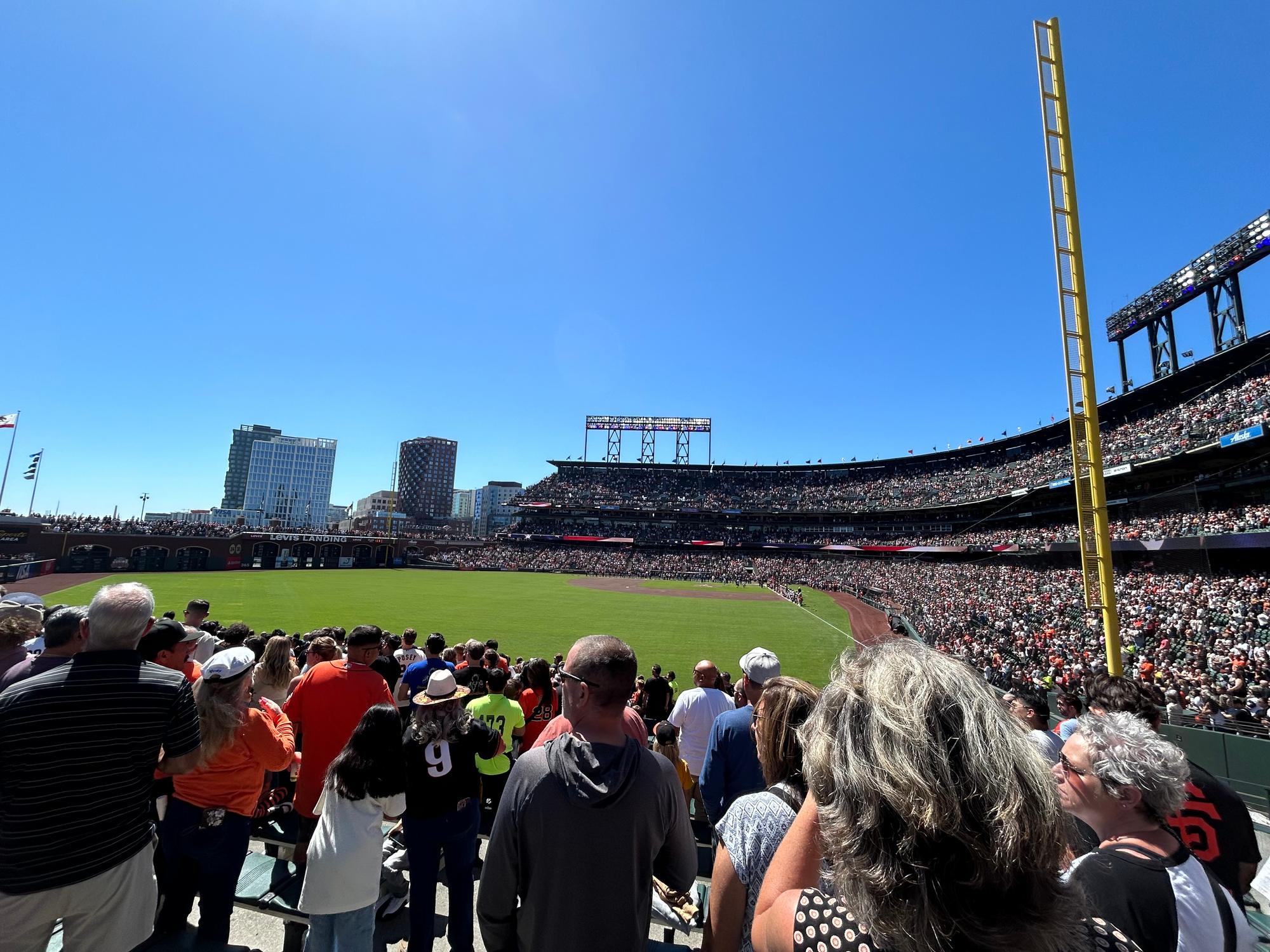
Why Oracle Park Matters
The quick read
Oracle Park exists because San Francisco voters kept saying no. Ballot measures for a publicly funded stadium failed repeatedly, the Giants nearly moved to Tampa Bay in 1992, and when new local ownership kept the team home, it paid for the new park itself. No MLB park had been privately financed since Dodger Stadium in 1962. The building that opened on the water in April 2000 then packed a quarter century with Bonds hitting baseballs into McCovey Cove, three World Series titles in five seasons, and a sellout streak that ran 530 straight games.
Candlestick and the near-move to Tampa Bay
For forty seasons, 1960 through 1999, the Giants played at Candlestick Park, a concrete bowl on Candlestick Point that they shared with the 49ers. Its defining feature was wind. The park never shook that reputation.
By 1992 the franchise had nearly left. A deal was in motion to sell the team and move it to Tampa Bay before a local ownership group led by Peter Magowan bought the Giants and kept them in San Francisco.
The park the voters wouldn’t pay for
San Francisco voters rejected public stadium funding multiple times across the late 1980s and early 1990s. So the Magowan group built the park with private money: roughly $357 million, the first privately financed major-league park since Dodger Stadium opened in 1962. HOK Sport, the firm now called Populous, designed it.
The site was a lot on China Basin, with the right-field wall backing directly onto the bay. That wall, and the water behind it, would end up defining the park more than anything inside it.
Opening night, April 11, 2000
The park opened on April 11, 2000, as Pacific Bell Park, and the Dodgers spoiled the party. Kevin Elster hit three home runs, Los Angeles won 6-5, and the Dodgers went on to sweep the opening series.
Four names since 2000
The sign out front has changed three times without the building going anywhere. Pacific Bell Park through 2003, SBC Park starting in 2004 after the phone company rebranded, AT&T Park from 2006, and Oracle Park since January 2019 on a naming deal reported at about 20 years.
The Bonds era
Barry Bonds made the new park a nightly event. He hit 73 home runs in 2001, still the single-season record. On August 7, 2007, he hit career home run number 756 here, passing Hank Aaron.
The signature stat is local. Balls that clear the right-field arcade on the fly and land in McCovey Cove count as splash hits, tracked on a counter on the wall. The park had logged 108 of them through late 2025, by 32 different players. Bonds hit 35, more than any other player.
The Bonds years produced one pennant. The 2002 World Series went seven games, and the Angels won it. That was as close as the Bonds-era Giants got.
The even-year dynasty
What Bonds never got, the next core delivered three times. The 2010 Giants won the franchise’s first World Series since moving to San Francisco. Two years later they swept Detroit. In 2014 they won it again in Kansas City, with Madison Bumgarner closing out Game 7 in relief.
Buster Posey was the face of all three: Rookie of the Year in 2010, NL MVP in 2012, and a ring from each run. For five seasons the pattern held, and “even year” became shorthand for a championship expectation.
The sellout streak and the lean years
From October 1, 2010 through July 18, 2017, the Giants sold out 530 consecutive games. It is the second-longest sellout streak in MLB history, behind only Fenway Park’s 794.
That era is over. The streak ended in July 2017, and the seasons since have mostly run lean, with one big exception: the 107-win 2021 team that took the NL West with a franchise-record season. The practical upside for a visiting fan: a ticket that was once nearly impossible to get is now a buyable one, and the park itself has stayed the draw.
The 2020 renovation
Before the 2020 season the Giants rebuilt the outfield. The bullpens moved out of foul ground to behind the center-field and right-center walls, and the fences came in: center field from 399 feet to 391, and the right-center gap known as Triples Alley from 421 to 415. The new Triples Alley number is 415, San Francisco’s area code.
Willie Mays and the number 24
The park’s address is 24 Willie Mays Plaza. The right-field wall is 24 feet high. Both numbers are his. A nine-foot statue of Mays has stood in front of the home-plate gate since the park opened, and it is the default meeting spot before games.
Mays died on June 18, 2024. The Giants opened the park that week so fans could pay their respects during the Rickwood Field tribute game, and there is now a Willie Mays Tribute Wall just inside the Willie Mays Gate.
The History Walk and the Wall of Fame
The free Portwalk behind the right-field wall is also where the park keeps its history. The History Walk runs 28 bronze plaques along it. On the King Street side, the Giants Wall of Fame plaques line the park’s outer wall. Neither requires a ticket. You can walk the whole loop on a day with no game at all.
Posey upstairs and the 25th season
The dynasty’s catcher now runs the baseball side. The Giants named Buster Posey President of Baseball Operations in late 2024.
The 2025 season was the park’s 25th, and the crowds came back: roughly 2.67 million fans, seventh in MLB and one of the bigger year-over-year attendance jumps in the league.
See something out of date at Oracle Park, or know it better than we do? Tell us.